PROJECT 002 | MARINE INSURANCE INVESTIGATION
Hull & Machinery Damage Investigation & Claim Assessment
Propulsion Damage Assessment. Technical Evidence. Repair Cost Evaluation.
H&M
Claim Assessment
Structural & Equipment Damage
Damage Investigation
Technical
Repair Cost Review
01. Project Overview
Project 002 | Hull & Machinery Damage Investigation & Claim Assessment
Following a reported external attack involving a commercial tanker, significant concerns arose regarding the integrity of the vessel's propulsion system and associated machinery.
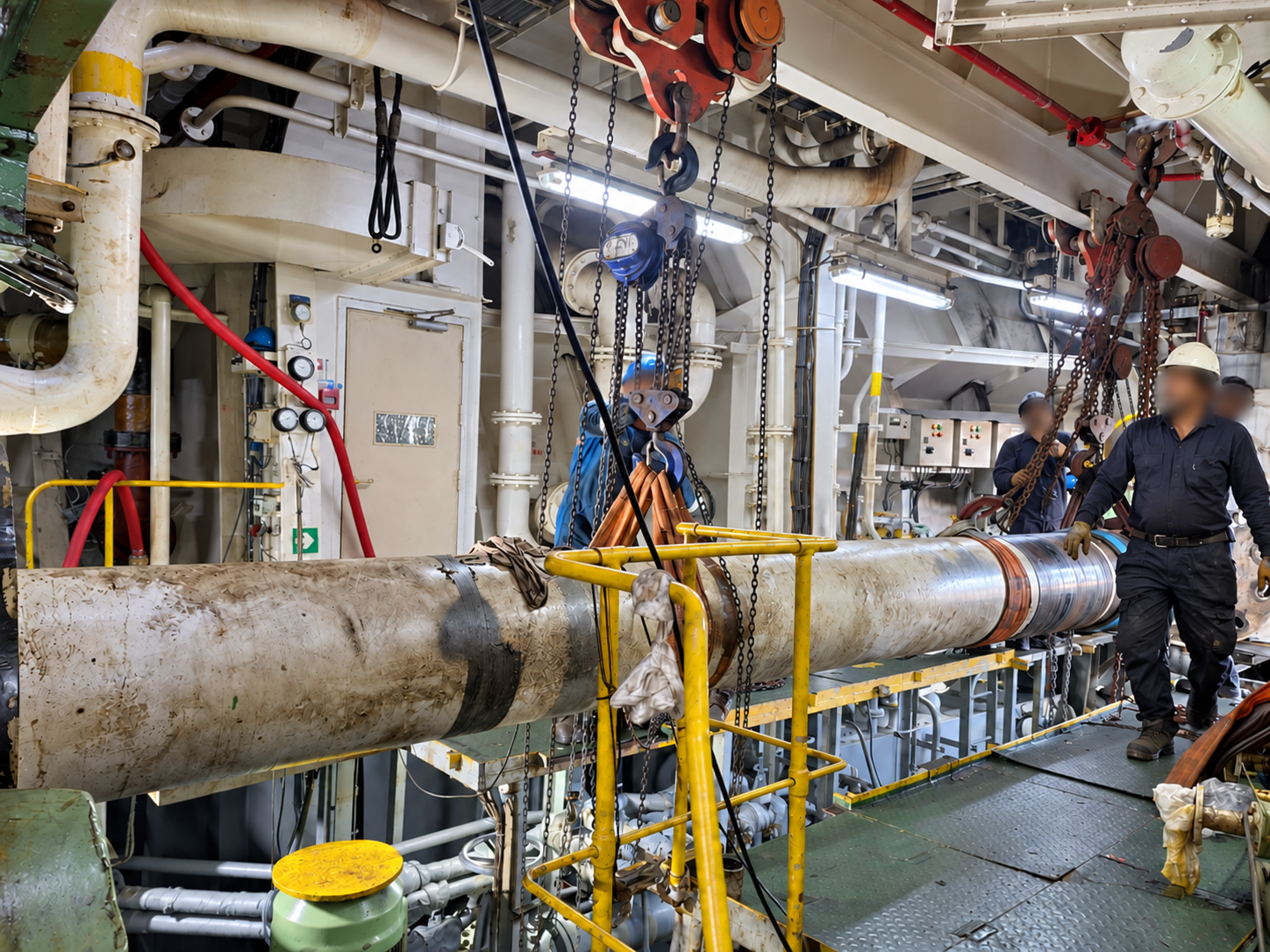
The technical assessment focused on documented damage to the intermediate shaft journal and bearing arrangement, alongside the examination of related propulsion components, repair requirements and potential consequential damage.
The investigation involved reviewing specialist inspection findings, dimensional measurements, maintenance and repair documentation, shaft removal procedures and the technical basis for the proposed restoration works.
Particular emphasis was placed on distinguishing verified physical damage from potential causation mechanisms, evaluating the necessity of corrective measures and examining the supporting repair expenditure.
The resulting technical assessment provided a structured evidential basis for Hull & Machinery claim consideration, including the identification of matters requiring further verification before final determination.
02. The Technical Challenge
The principal technical challenge was to establish the extent and significance of the propulsion machinery damage following a reported external attack, while determining which findings could be reliably associated with the casualty.
Specialist inspections identified extensive scoring and surface deterioration affecting the intermediate shaft journal and its associated white metal bearing. These defects required detailed dimensional assessment, workshop restoration and subsequent shaft alignment verification.
The investigation also considered the wider propulsion arrangement, including main engine bearing inspections, stern tube components, lubrication systems and associated machinery. Each item required separate technical evaluation to distinguish confirmed damage from potential consequential defects or unrelated maintenance requirements.
A further challenge was the assessment of repair necessity, technical acceptance criteria and the supporting shipyard expenditure. The objective was to establish a defensible technical position, identifying substantiated repairs while avoiding unsupported assumptions regarding causation or insurance recoverability.
03. Damage Investigation & Technical Findings
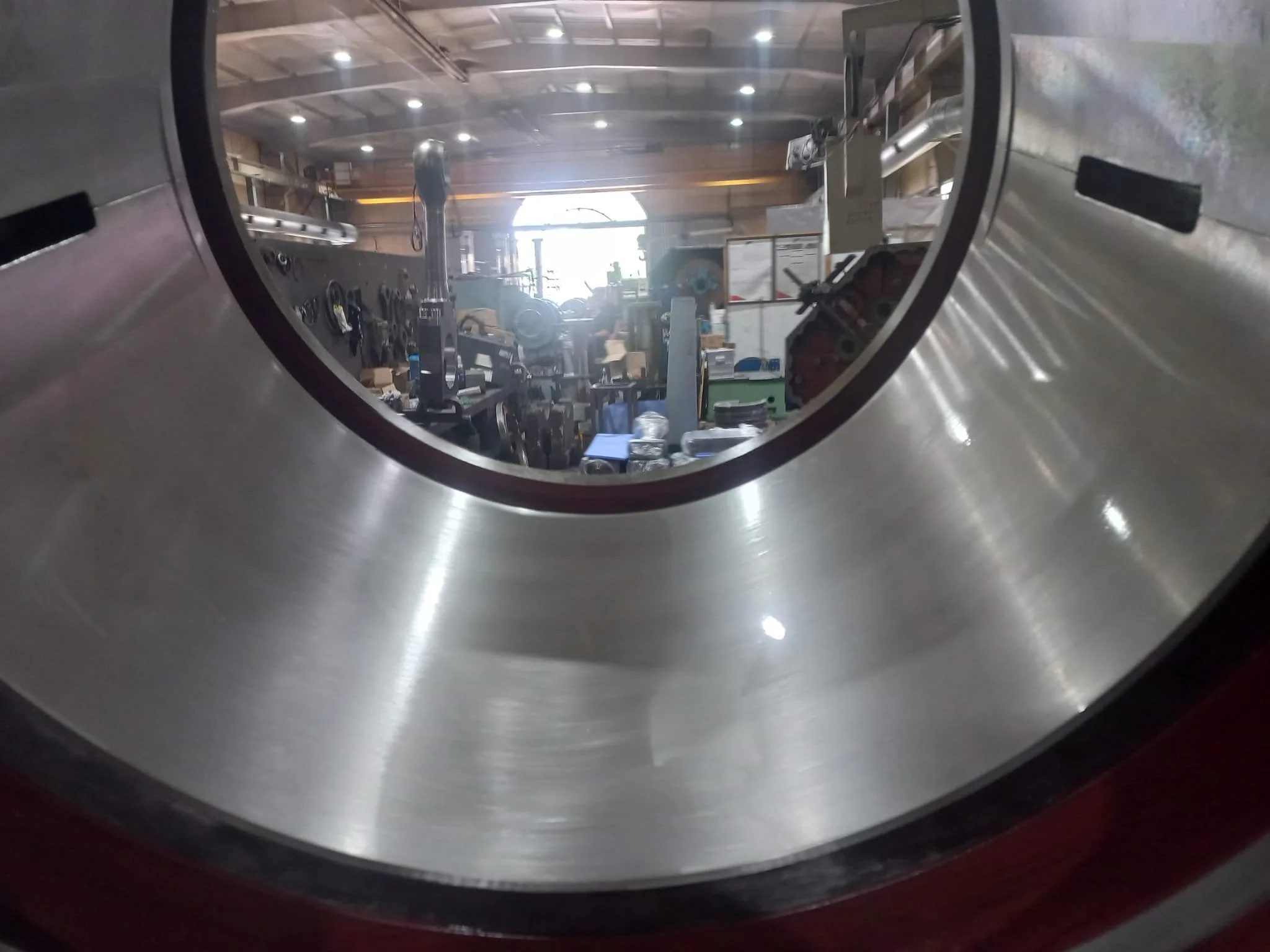
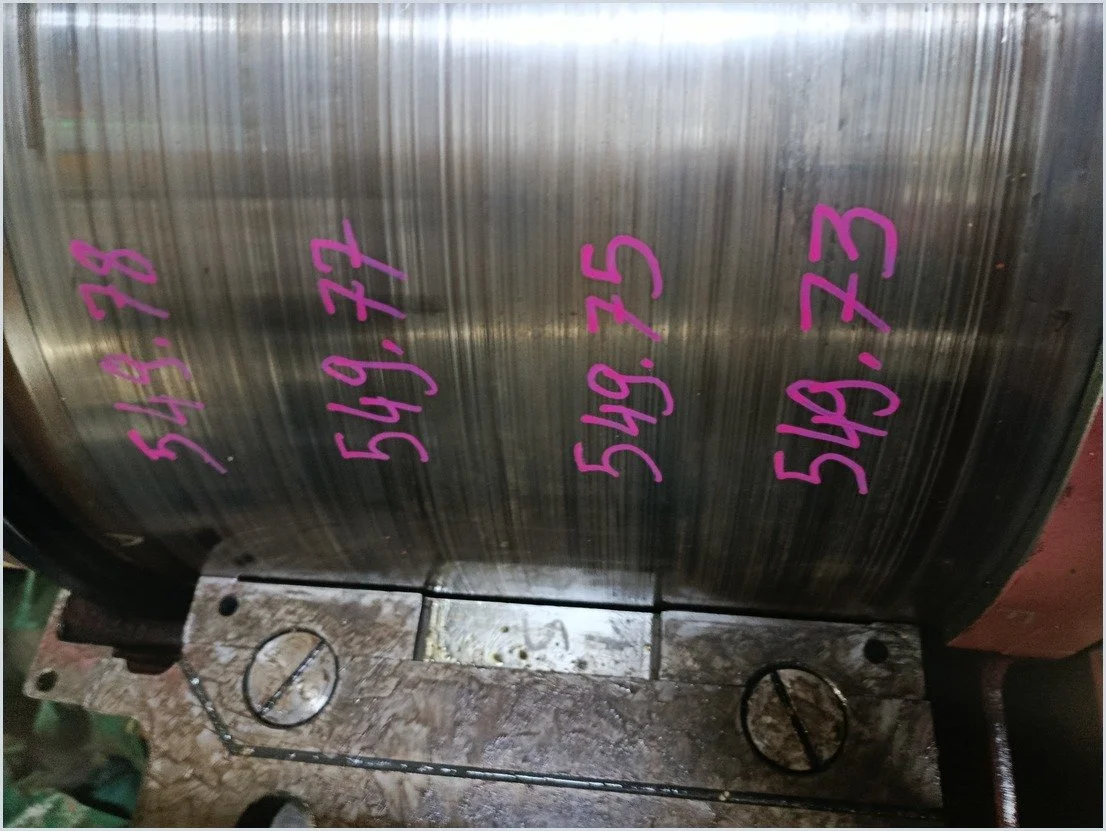
The technical investigation established significant physical damage to the intermediate shaft journal and its associated white metal bearing.
Specialist examinations identified pronounced scoring, surface deterioration and local pitting affecting the journal, together with distress and material damage to the bearing running surfaces.
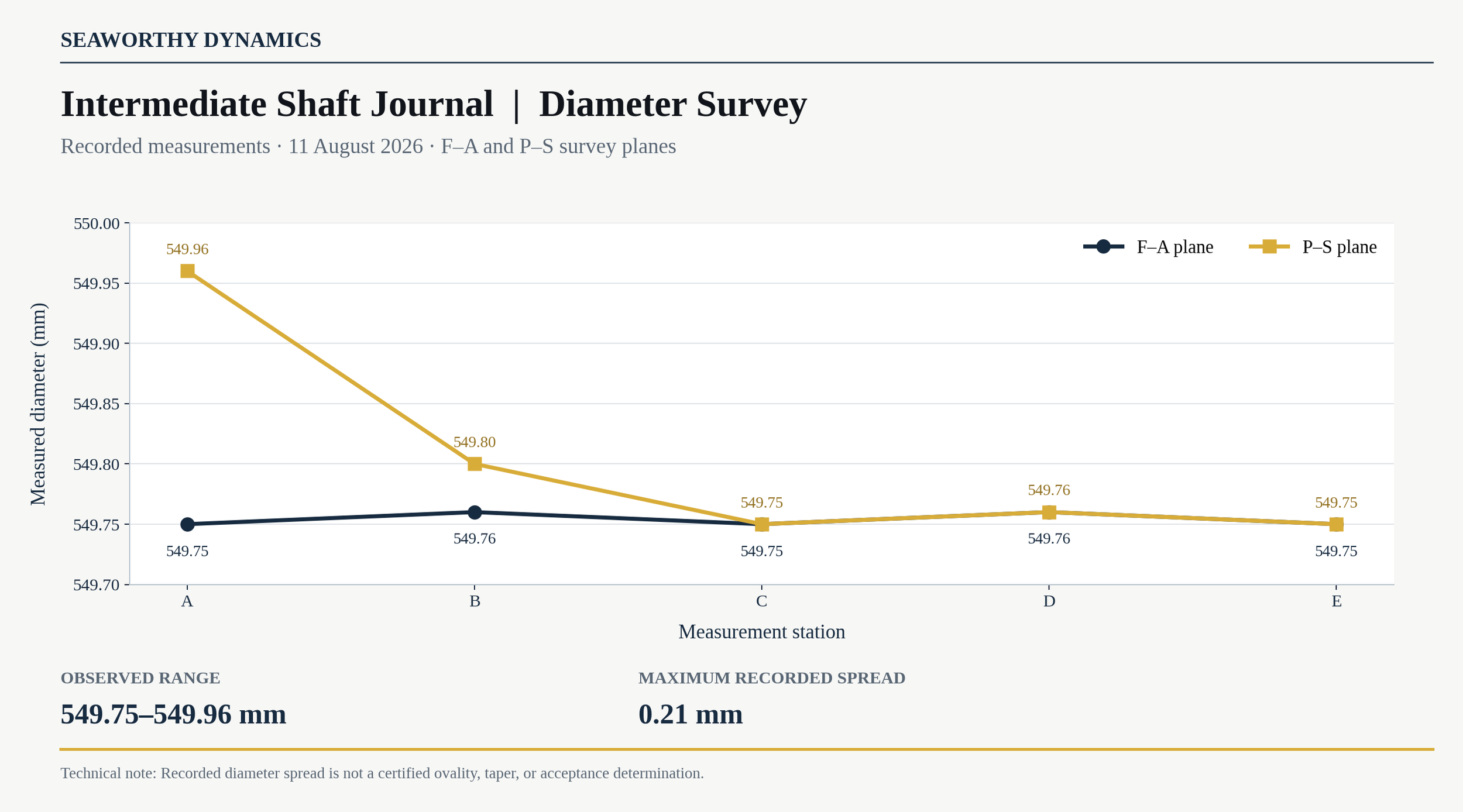
Detailed dimensional and surface condition measurements were reviewed to assess the extent of deterioration and establish the technical requirements for restoration.
The findings supported the necessity for controlled journal machining, bearing refurbishment and subsequent shaft alignment and load verification.
Importantly, the investigation distinguished documented machinery damage from potential causation mechanisms, ensuring that conclusions remained supported by the available technical evidence.
04. Causation Assessment
The causation assessment focused on determining whether the documented propulsion machinery damage could be attributed to the reported external strike or whether other contributing mechanisms required consideration.
The confirmed physical findings included significant deterioration of the intermediate shaft journal and white metal bearing. However, establishing the initiating cause required a separate assessment of the machinery operating history, shaft alignment, bearing loading conditions and lubrication performance.
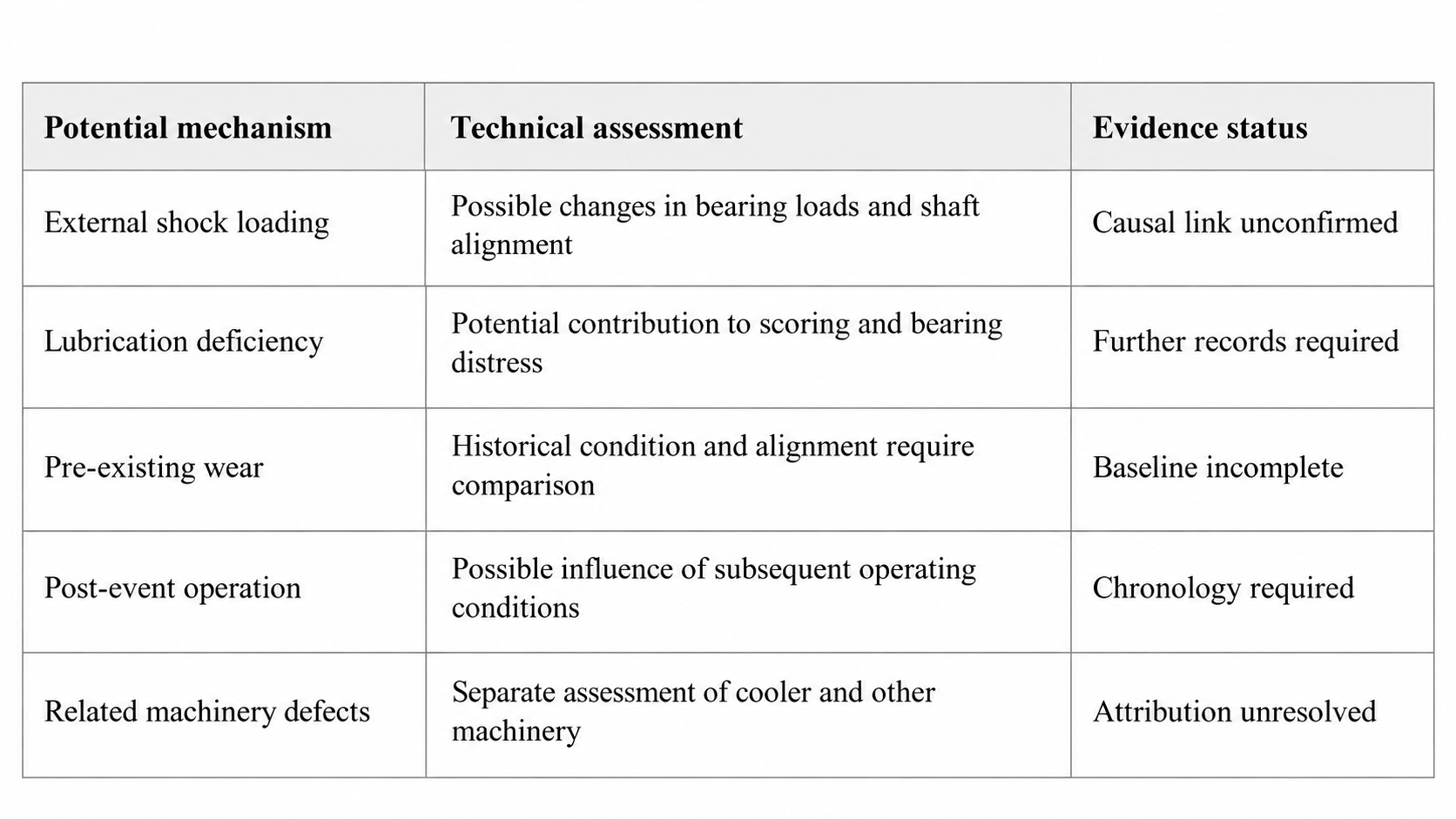
Potential mechanisms considered included impact-related shock loading, changes in shaft alignment or bearing reactions, lubrication deficiencies, pre-existing wear and subsequent operating conditions.
Each hypothesis was evaluated against the available inspection findings and technical records, with particular attention to identifying evidential gaps and avoiding assumptions regarding the origin of individual machinery defects.
The assessment therefore distinguished confirmed damage from plausible causation scenarios and established the additional evidence necessary to support a defensible Hull & Machinery claim evaluation.
05. Repair Methodology & Technical Verification
The repair assessment focused on restoring the intermediate shaft journal and associated bearing arrangement through controlled engineering procedures and documented technical verification.
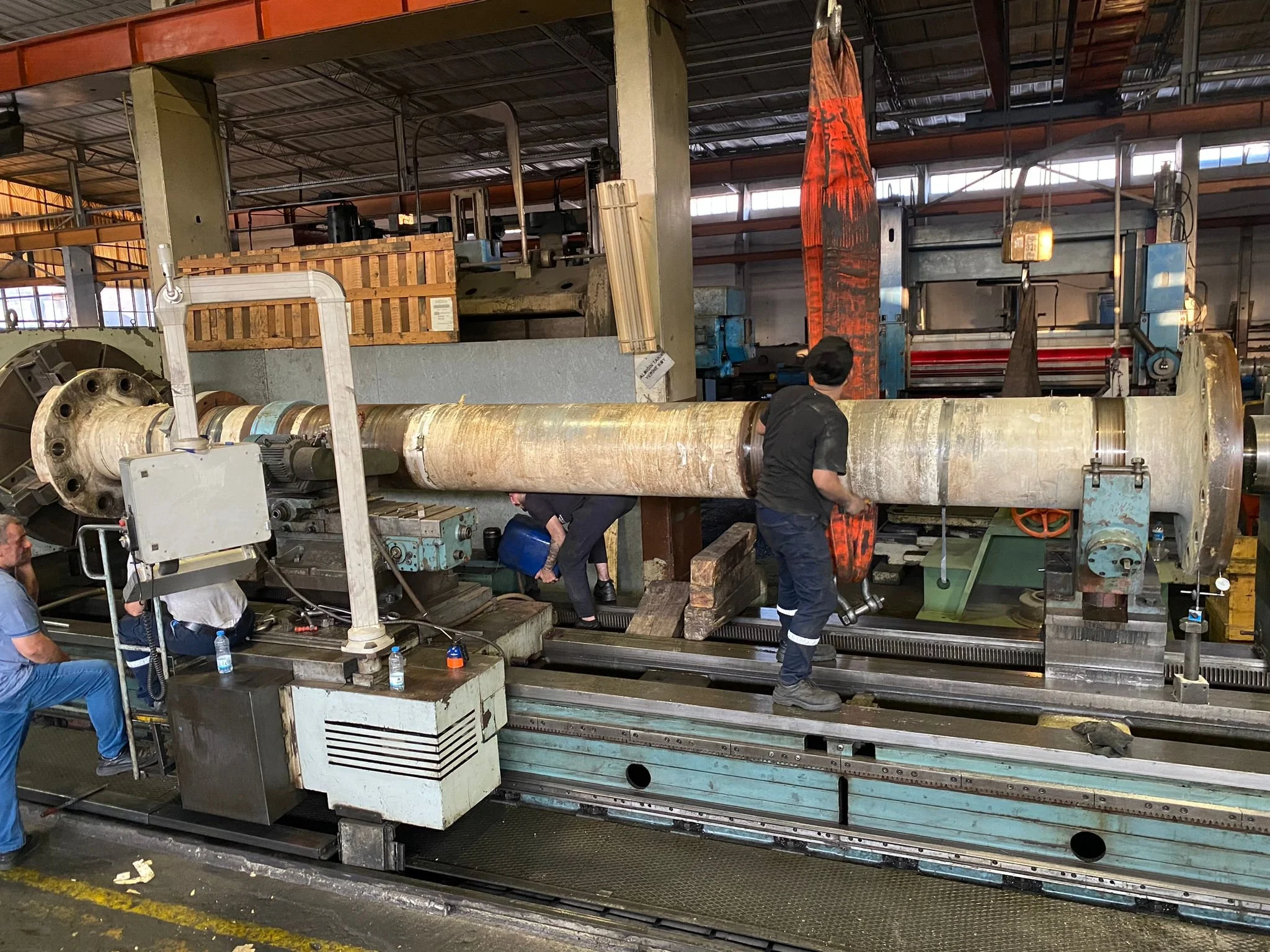
Following shaft removal, the damaged journal required specialist workshop examination to determine the appropriate machining and surface restoration methodology. Particular attention was given to dimensional tolerances, surface condition and the compatibility of the restored journal with the bearing arrangement.
The white metal bearing condition was assessed separately to establish the necessary refurbishment or replacement scope and the corresponding inspection requirements.
The proposed reinstatement process also required consideration of shaft alignment, bearing reactions, lubrication arrangements and operational testing to establish whether the propulsion system could be safely returned to service.
From a Hull & Machinery claim perspective, the investigation examined the technical justification for individual repair activities, their supporting documentation and the distinction between necessary casualty-related expenditure and other maintenance or improvement works.
06. Repair Cost Review & Claim Assessment
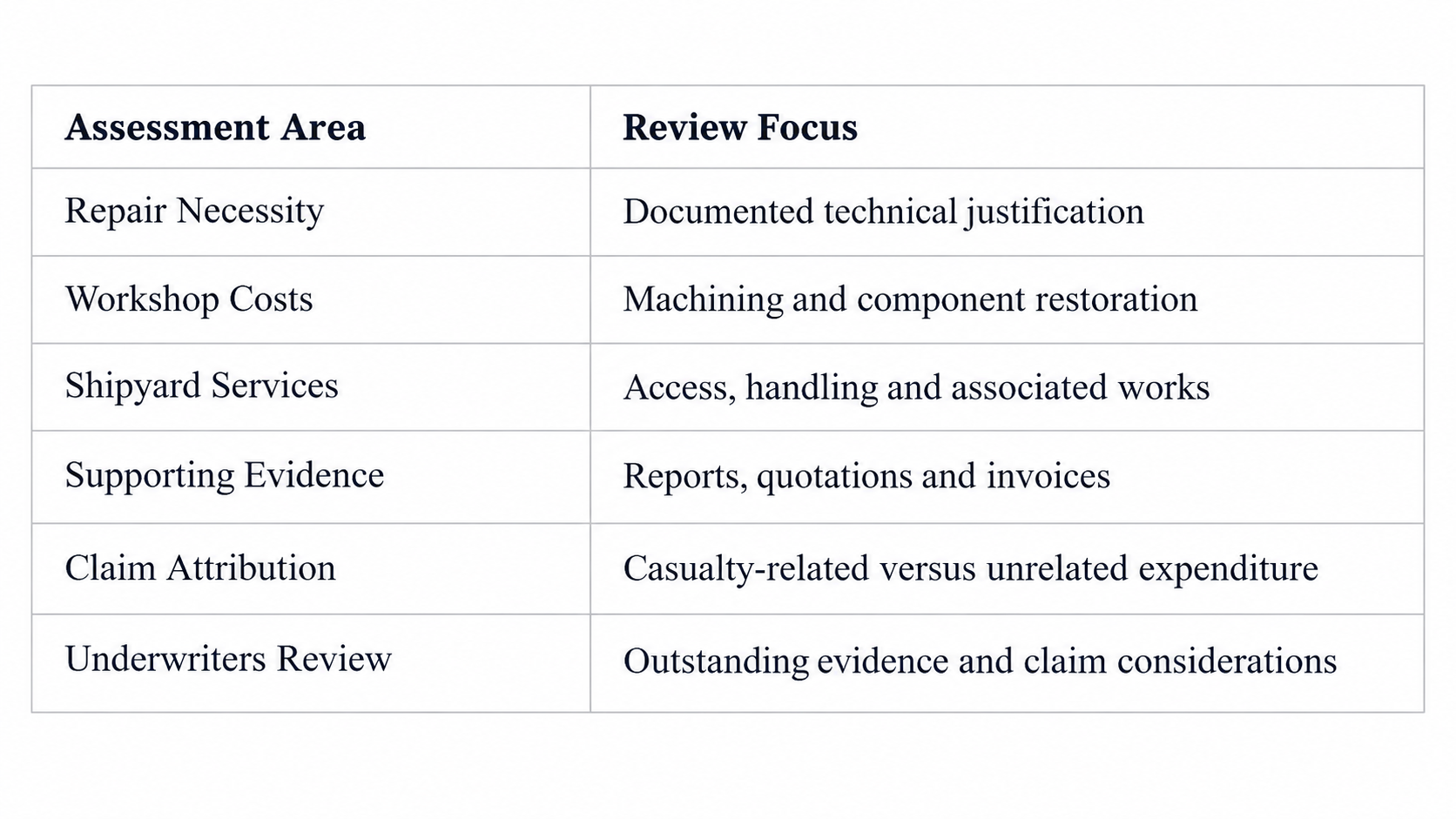
The repair cost assessment examined the technical justification and supporting documentation for the expenditure associated with the vessel's machinery restoration.
Particular attention was given to the intermediate shaft removal, specialist workshop machining, bearing refurbishment, component handling and associated shipyard services.
The review considered whether the proposed repair methods were proportionate to the documented damage, whether individual cost items were adequately supported and whether alternative technical solutions required evaluation.
A key objective was to distinguish expenditure directly attributable to the reported casualty from routine maintenance, pre-existing defects, unrelated repairs and potential betterment.
The assessment provided a structured basis for evaluating the technical merits of individual claim items, identifying outstanding documentation and supporting informed consideration by Hull & Machinery Underwriters.
The process remained evidence-driven, with technical substantiation and insurance recoverability treated as separate considerations.
07. Technical Value & Project Outcome
The investigation brought together specialist inspection findings, dimensional measurements, repair methodologies and supporting cost documentation to establish a structured technical assessment of the vessel's damage.
By distinguishing verified physical defects from potential causation mechanisms, the assessment helped identify which technical conclusions were substantiated and which matters required further evidence.
The review also examined the necessity and technical justification of proposed repairs, providing a clearer basis for evaluating individual expenditure items and their potential relevance to the Hull & Machinery claim.
The principal value of the assignment was technical clarity, independent engineering judgement and a transparent evidential basis for informed decision-making.
This approach supported a more disciplined assessment of the claim, while preserving the distinction between engineering findings, casualty attribution and the final determination of insurance liability by the Underwriters.
WHEN TECHNICAL EVIDENCE MATTERS
Engineering Clarity. Defensible Claims. Informed Decisions.
Complex machinery failures require more than technical repairs. They demand a clear understanding of the underlying causes, a defensible assessment of responsibility and the ability to translate engineering findings into effective commercial action.
This project reflects the technical investigation, claims management and negotiation experience now brought together through Seaworthy Dynamics.
From recurring equipment failures and disputed manufacturer responsibility to technically substantiated claims and corrective action strategies, our approach focuses on protecting shipowners' interests and delivering practical, commercially meaningful outcomes.
Facing a similar technical challenge?
Whether your fleet is experiencing repeated machinery failures, unresolved warranty disputes or manufacturer claims, Seaworthy Dynamics can provide independent technical assessment and strategic support to help establish the facts, evaluate available options and pursue an effective resolution.